•  
ChineseToday | Guardians of endangered trees in SW China

ChineseToday | Guardians of endangered trees in SW China

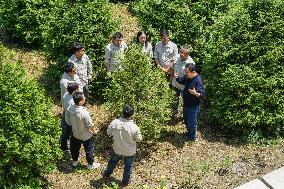
(240811) -- CHONGQING, Aug. 11, 2024 Photo by Xinhua/ABACAPRESS.COM) -- Staff members of the Thuja sutchuenensis research base of Xuebaoshan national nature reserve discuss the breeding technique with Guo Quanshui (1st R), expert from Chinese Academy of Forestry, at the research base in Kaizhou District of southwest China's Chongqing, April 26, 2024. Wild Thuja sutchuenensis is an endangered species of gymnosperm endemic to China and under national first-class protection. In 1998, the International Union for Conservation of Nature declared Thuja sutchuenensis extinct, but the species was rediscovered in Chengkou County in 1999. At present, the number of wild adult Thuja sutchuenensis plants in the world is less than 10,000, and they are only distributed in the areas of Daba Mountains including Kaizhou District and Chengkou County of Chongqing. In order to protect this endangered species, Yang Quan from Chongqing Xuebaoshan national nature reserve led a team to carry out the investigation and study of wild Thu

  •  
CHINA-JIANGSU-ZHEJIANG-TAIHU LAKE-GREEN TRANSFORMATION (CN)

CHINA-JIANGSU-ZHEJIANG-TAIHU LAKE-GREEN TRANSFORMATION (CN)

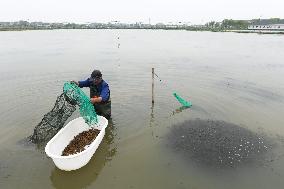
(240415) -- BEIJING, April 15, 2024 (Xinhua) -- A villager works at a crayfish breeding pond in Xulou Village of Huzhou City, east China's Zhejiang Province, April 11, 2024. Located in the lower reaches of the Yangtze River, Taihu Lake is an important water source for 17 million residents in one of China's most densely populated and economically developed areas. The water quality of Taihu Lake, China's third-largest freshwater lake, keeps impoving over the years and reached in 2023 its best level since 2007. The improved ecological environment has also boosted economic development around the lake, with a booming of various industries including sightseeing, outdoor sports, etc. (Xinhua/Weng Xinyang)

  •  
XINHUA PHOTOS OF THE DAY

XINHUA PHOTOS OF THE DAY

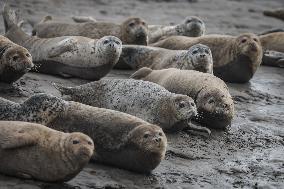
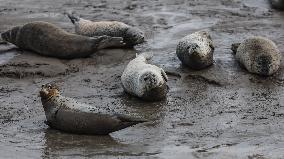
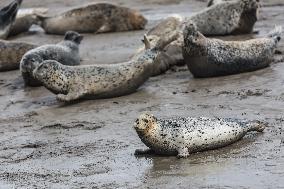
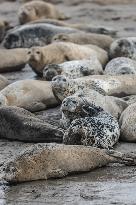
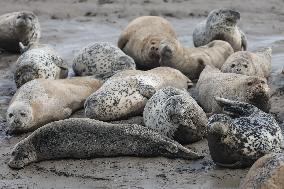
(240410) -- BEIJING, April 10, 2024 (Xinhua) -- Spotted seals rest on mudflat of Liaodong Bay in Panjin City, northeast China's Liaoning Province, April 9, 2024. As temperature rises, spotted seals inhabiting the Liaodong Bay in Panjin City, Liaoning Province, are entering their active period. Liaodong Bay, which is situated at the northernmost end of the ice-covered area in Chinese waters, represents the southernmost breeding area among the eight breeding zones for spotted seals worldwide. Designated as a national first-level protected wildlife species, spotted seals are the only pinniped marine mammals that breed in Chinese waters. In recent years, Panjin City has committed to preserving the ecological balance of its coastal areas, restoring 85,900 mu (approximately 5,727 hectares) of coastal wetlands and adding 17.6 kilometers of natural coastline. These efforts have created favorable breeding and habitat conditions for spotted seals migrating to the area annually. According to statistics, the popu

  •  
CHINA-LIAONING-PANJIN-LIAODONG BAY-SPOTTED SEAL (CN)

CHINA-LIAONING-PANJIN-LIAODONG BAY-SPOTTED SEAL (CN)

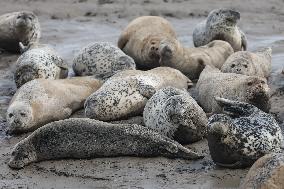
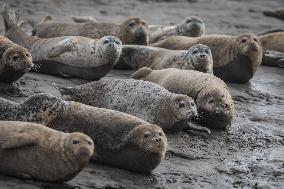
(240409) -- PANJIN, April 9, 2024 (Xinhua) -- Spotted seals rest on mudflat of Liaodong Bay in Panjin City, northeast China's Liaoning Province, April 9, 2024. As temperature rises, spotted seals inhabiting the Liaodong Bay in Panjin City, Liaoning Province, are entering their active period. Liaodong Bay, which is situated at the northernmost end of the ice-covered area in Chinese waters, represents the southernmost breeding area among the eight breeding zones for spotted seals worldwide. Designated as a national first-level protected wildlife species, spotted seals are the only pinniped marine mammals that breed in Chinese waters. In recent years, Panjin City has committed to preserving the ecological balance of its coastal areas, restoring 85,900 mu (approximately 5,727 hectares) of coastal wetlands and adding 17.6 kilometers of natural coastline. These efforts have created favorable breeding and habitat conditions for spotted seals migrating to the area annually. According to statistics, the popula

  •  
CHINA-LIAONING-PANJIN-LIAODONG BAY-SPOTTED SEAL (CN)

CHINA-LIAONING-PANJIN-LIAODONG BAY-SPOTTED SEAL (CN)

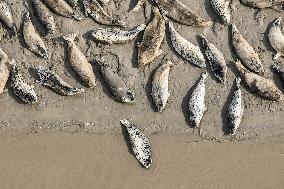
(240409) -- PANJIN, April 9, 2024 (Xinhua) -- An aerial drone photo taken on April 9, 2024 shows spotted seals resting on mudflat of Liaodong Bay in Panjin City, northeast China's Liaoning Province. As temperature rises, spotted seals inhabiting the Liaodong Bay in Panjin City, Liaoning Province, are entering their active period. Liaodong Bay, which is situated at the northernmost end of the ice-covered area in Chinese waters, represents the southernmost breeding area among the eight breeding zones for spotted seals worldwide. Designated as a national first-level protected wildlife species, spotted seals are the only pinniped marine mammals that breed in Chinese waters. In recent years, Panjin City has committed to preserving the ecological balance of its coastal areas, restoring 85,900 mu (approximately 5,727 hectares) of coastal wetlands and adding 17.6 kilometers of natural coastline. These efforts have created favorable breeding and habitat conditions for spotted seals migrating to the area annual

  •  
CHINA-LIAONING-PANJIN-LIAODONG BAY-SPOTTED SEAL (CN)

CHINA-LIAONING-PANJIN-LIAODONG BAY-SPOTTED SEAL (CN)

(240409) -- PANJIN, April 9, 2024 (Xinhua) -- Spotted seals rest on mudflat of Liaodong Bay in Panjin City, northeast China's Liaoning Province, April 9, 2024. As temperature rises, spotted seals inhabiting the Liaodong Bay in Panjin City, Liaoning Province, are entering their active period. Liaodong Bay, which is situated at the northernmost end of the ice-covered area in Chinese waters, represents the southernmost breeding area among the eight breeding zones for spotted seals worldwide. Designated as a national first-level protected wildlife species, spotted seals are the only pinniped marine mammals that breed in Chinese waters. In recent years, Panjin City has committed to preserving the ecological balance of its coastal areas, restoring 85,900 mu (approximately 5,727 hectares) of coastal wetlands and adding 17.6 kilometers of natural coastline. These efforts have created favorable breeding and habitat conditions for spotted seals migrating to the area annually. According to statistics, the popula

  •  
CHINA-LIAONING-PANJIN-LIAODONG BAY-SPOTTED SEAL (CN)

CHINA-LIAONING-PANJIN-LIAODONG BAY-SPOTTED SEAL (CN)

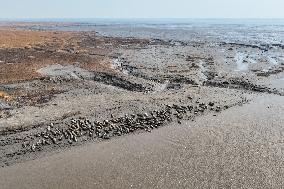
(240409) -- PANJIN, April 9, 2024 (Xinhua) -- An aerial drone photo taken on April 9, 2024 shows spotted seals resting on mudflat of Liaodong Bay in Panjin City, northeast China's Liaoning Province. As temperature rises, spotted seals inhabiting the Liaodong Bay in Panjin City, Liaoning Province, are entering their active period. Liaodong Bay, which is situated at the northernmost end of the ice-covered area in Chinese waters, represents the southernmost breeding area among the eight breeding zones for spotted seals worldwide. Designated as a national first-level protected wildlife species, spotted seals are the only pinniped marine mammals that breed in Chinese waters. In recent years, Panjin City has committed to preserving the ecological balance of its coastal areas, restoring 85,900 mu (approximately 5,727 hectares) of coastal wetlands and adding 17.6 kilometers of natural coastline. These efforts have created favorable breeding and habitat conditions for spotted seals migrating to the area annual

  •  
CHINA-LIAONING-PANJIN-LIAODONG BAY-SPOTTED SEAL (CN)

CHINA-LIAONING-PANJIN-LIAODONG BAY-SPOTTED SEAL (CN)

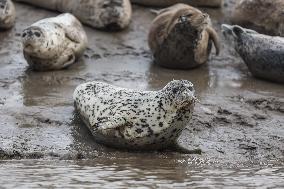
(240409) -- PANJIN, April 9, 2024 (Xinhua) -- Spotted seals rest on mudflat of Liaodong Bay in Panjin City, northeast China's Liaoning Province, April 9, 2024. As temperature rises, spotted seals inhabiting the Liaodong Bay in Panjin City, Liaoning Province, are entering their active period. Liaodong Bay, which is situated at the northernmost end of the ice-covered area in Chinese waters, represents the southernmost breeding area among the eight breeding zones for spotted seals worldwide. Designated as a national first-level protected wildlife species, spotted seals are the only pinniped marine mammals that breed in Chinese waters. In recent years, Panjin City has committed to preserving the ecological balance of its coastal areas, restoring 85,900 mu (approximately 5,727 hectares) of coastal wetlands and adding 17.6 kilometers of natural coastline. These efforts have created favorable breeding and habitat conditions for spotted seals migrating to the area annually. According to statistics, the popula

  •  
CHINA-LIAONING-PANJIN-LIAODONG BAY-SPOTTED SEAL (CN)

CHINA-LIAONING-PANJIN-LIAODONG BAY-SPOTTED SEAL (CN)

(240409) -- PANJIN, April 9, 2024 (Xinhua) -- Spotted seals rest on mudflat of Liaodong Bay in Panjin City, northeast China's Liaoning Province, April 9, 2024. As temperature rises, spotted seals inhabiting the Liaodong Bay in Panjin City, Liaoning Province, are entering their active period. Liaodong Bay, which is situated at the northernmost end of the ice-covered area in Chinese waters, represents the southernmost breeding area among the eight breeding zones for spotted seals worldwide. Designated as a national first-level protected wildlife species, spotted seals are the only pinniped marine mammals that breed in Chinese waters. In recent years, Panjin City has committed to preserving the ecological balance of its coastal areas, restoring 85,900 mu (approximately 5,727 hectares) of coastal wetlands and adding 17.6 kilometers of natural coastline. These efforts have created favorable breeding and habitat conditions for spotted seals migrating to the area annually. According to statistics, the popula

  •  
CHINA-LIAONING-PANJIN-LIAODONG BAY-SPOTTED SEAL (CN)

CHINA-LIAONING-PANJIN-LIAODONG BAY-SPOTTED SEAL (CN)

(240409) -- PANJIN, April 9, 2024 (Xinhua) -- Spotted seals rest on mudflat of Liaodong Bay in Panjin City, northeast China's Liaoning Province, April 9, 2024. As temperature rises, spotted seals inhabiting the Liaodong Bay in Panjin City, Liaoning Province, are entering their active period. Liaodong Bay, which is situated at the northernmost end of the ice-covered area in Chinese waters, represents the southernmost breeding area among the eight breeding zones for spotted seals worldwide. Designated as a national first-level protected wildlife species, spotted seals are the only pinniped marine mammals that breed in Chinese waters. In recent years, Panjin City has committed to preserving the ecological balance of its coastal areas, restoring 85,900 mu (approximately 5,727 hectares) of coastal wetlands and adding 17.6 kilometers of natural coastline. These efforts have created favorable breeding and habitat conditions for spotted seals migrating to the area annually. According to statistics, the popula

  •  
CHINA-LIAONING-PANJIN-LIAODONG BAY-SPOTTED SEAL (CN)

CHINA-LIAONING-PANJIN-LIAODONG BAY-SPOTTED SEAL (CN)

(240409) -- PANJIN, April 9, 2024 (Xinhua) -- Spotted seals rest on mudflat of Liaodong Bay in Panjin City, northeast China's Liaoning Province, April 9, 2024. As temperature rises, spotted seals inhabiting the Liaodong Bay in Panjin City, Liaoning Province, are entering their active period. Liaodong Bay, which is situated at the northernmost end of the ice-covered area in Chinese waters, represents the southernmost breeding area among the eight breeding zones for spotted seals worldwide. Designated as a national first-level protected wildlife species, spotted seals are the only pinniped marine mammals that breed in Chinese waters. In recent years, Panjin City has committed to preserving the ecological balance of its coastal areas, restoring 85,900 mu (approximately 5,727 hectares) of coastal wetlands and adding 17.6 kilometers of natural coastline. These efforts have created favorable breeding and habitat conditions for spotted seals migrating to the area annually. According to statistics, the popula

  •  
CHINA-LIAONING-PANJIN-LIAODONG BAY-SPOTTED SEAL (CN)

CHINA-LIAONING-PANJIN-LIAODONG BAY-SPOTTED SEAL (CN)

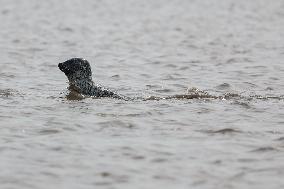
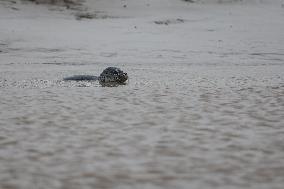
(240409) -- PANJIN, April 9, 2024 (Xinhua) -- A spotted seal is seen in waters of Sandaogou in Liaodong Bay in Panjin City, northeast China's Liaoning Province, April 9, 2024. As temperature rises, spotted seals inhabiting the Liaodong Bay in Panjin City, Liaoning Province, are entering their active period. Liaodong Bay, which is situated at the northernmost end of the ice-covered area in Chinese waters, represents the southernmost breeding area among the eight breeding zones for spotted seals worldwide. Designated as a national first-level protected wildlife species, spotted seals are the only pinniped marine mammals that breed in Chinese waters. In recent years, Panjin City has committed to preserving the ecological balance of its coastal areas, restoring 85,900 mu (approximately 5,727 hectares) of coastal wetlands and adding 17.6 kilometers of natural coastline. These efforts have created favorable breeding and habitat conditions for spotted seals migrating to the area annually. According to statis

  •  
CHINA-LIAONING-PANJIN-LIAODONG BAY-SPOTTED SEAL (CN)

CHINA-LIAONING-PANJIN-LIAODONG BAY-SPOTTED SEAL (CN)

(240409) -- PANJIN, April 9, 2024 (Xinhua) -- A spotted seal is seen in waters of Sandaogou in Liaodong Bay in Panjin City, northeast China's Liaoning Province, April 9, 2024. As temperature rises, spotted seals inhabiting the Liaodong Bay in Panjin City, Liaoning Province, are entering their active period. Liaodong Bay, which is situated at the northernmost end of the ice-covered area in Chinese waters, represents the southernmost breeding area among the eight breeding zones for spotted seals worldwide. Designated as a national first-level protected wildlife species, spotted seals are the only pinniped marine mammals that breed in Chinese waters. In recent years, Panjin City has committed to preserving the ecological balance of its coastal areas, restoring 85,900 mu (approximately 5,727 hectares) of coastal wetlands and adding 17.6 kilometers of natural coastline. These efforts have created favorable breeding and habitat conditions for spotted seals migrating to the area annually. According to statis

  •  
CHINA-LIAONING-PANJIN-LIAODONG BAY-SPOTTED SEAL (CN)

CHINA-LIAONING-PANJIN-LIAODONG BAY-SPOTTED SEAL (CN)

(240409) -- PANJIN, April 9, 2024 (Xinhua) -- Spotted seals rest on mudflat of Liaodong Bay in Panjin City, northeast China's Liaoning Province, April 9, 2024. As temperature rises, spotted seals inhabiting the Liaodong Bay in Panjin City, Liaoning Province, are entering their active period. Liaodong Bay, which is situated at the northernmost end of the ice-covered area in Chinese waters, represents the southernmost breeding area among the eight breeding zones for spotted seals worldwide. Designated as a national first-level protected wildlife species, spotted seals are the only pinniped marine mammals that breed in Chinese waters. In recent years, Panjin City has committed to preserving the ecological balance of its coastal areas, restoring 85,900 mu (approximately 5,727 hectares) of coastal wetlands and adding 17.6 kilometers of natural coastline. These efforts have created favorable breeding and habitat conditions for spotted seals migrating to the area annually. According to statistics, the popula

  •  
CHINA-HUBEI-ENDANGERED PLANTS-THREE GORGES RESERVOIR AREA (CN)

CHINA-HUBEI-ENDANGERED PLANTS-THREE GORGES RESERVOIR AREA (CN)

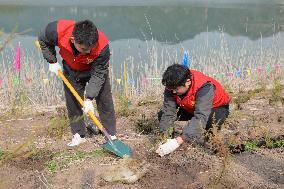
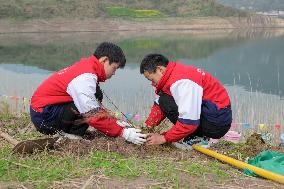
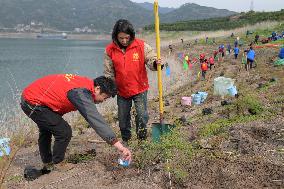
(240312) -- ZIGUI, March 12, 2024 (Xinhua) -- Volunteers plant Myricaria laxiflora in Guojiaba Township of Zigui County, central China's Hubei Province, March 12, 2024. A total of 3,000 artificially bred rare and endangered plants were reintroduced into the wild in the Three Gorges Reservoir area in central China's Hubei Province on Tuesday. The plants, including 1,000 Myricaria laxiflora and 2,000 Plantago fengdouensis, are endemic to the Yangtze River and have been reintroduced into their historical distribution areas through artificial breeding efforts. (Xinhua/Hu Jingwen)

  •  
CHINA-HUBEI-ENDANGERED PLANTS-THREE GORGES RESERVOIR AREA (CN)

CHINA-HUBEI-ENDANGERED PLANTS-THREE GORGES RESERVOIR AREA (CN)

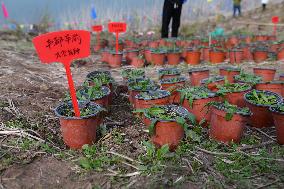
(240312) -- ZIGUI, March 12, 2024 (Xinhua) -- This photo taken on March 12, 2024 shows Plantago fengdouensis in Guojiaba Township of Zigui County, central China's Hubei Province. A total of 3,000 artificially bred rare and endangered plants were reintroduced into the wild in the Three Gorges Reservoir area in central China's Hubei Province on Tuesday. The plants, including 1,000 Myricaria laxiflora and 2,000 Plantago fengdouensis, are endemic to the Yangtze River and have been reintroduced into their historical distribution areas through artificial breeding efforts. (Xinhua/Hu Jingwen)

  •  
CHINA-HUBEI-ENDANGERED PLANTS-THREE GORGES RESERVOIR AREA (CN)

CHINA-HUBEI-ENDANGERED PLANTS-THREE GORGES RESERVOIR AREA (CN)

(240312) -- ZIGUI, March 12, 2024 (Xinhua) -- Students plant Myricaria laxiflora in Guojiaba Township of Zigui County, central China's Hubei Province, March 12, 2024. A total of 3,000 artificially bred rare and endangered plants were reintroduced into the wild in the Three Gorges Reservoir area in central China's Hubei Province on Tuesday. The plants, including 1,000 Myricaria laxiflora and 2,000 Plantago fengdouensis, are endemic to the Yangtze River and have been reintroduced into their historical distribution areas through artificial breeding efforts. (Xinhua/Hu Jingwen)

  •  
CHINA-HUBEI-ENDANGERED PLANTS-THREE GORGES RESERVOIR AREA (CN)

CHINA-HUBEI-ENDANGERED PLANTS-THREE GORGES RESERVOIR AREA (CN)

(240312) -- ZIGUI, March 12, 2024 (Xinhua) -- Volunteers water Myricaria laxiflora in Guojiaba Township of Zigui County, central China's Hubei Province, March 12, 2024. A total of 3,000 artificially bred rare and endangered plants were reintroduced into the wild in the Three Gorges Reservoir area in central China's Hubei Province on Tuesday. The plants, including 1,000 Myricaria laxiflora and 2,000 Plantago fengdouensis, are endemic to the Yangtze River and have been reintroduced into their historical distribution areas through artificial breeding efforts. (Xinhua/Hu Jingwen)

  •  
CHINA-HUBEI-ENDANGERED PLANTS-THREE GORGES RESERVOIR AREA (CN)

CHINA-HUBEI-ENDANGERED PLANTS-THREE GORGES RESERVOIR AREA (CN)

(240312) -- ZIGUI, March 12, 2024 (Xinhua) -- Students water Myricaria laxiflora in Guojiaba Township of Zigui County, central China's Hubei Province, March 12, 2024. A total of 3,000 artificially bred rare and endangered plants were reintroduced into the wild in the Three Gorges Reservoir area in central China's Hubei Province on Tuesday. The plants, including 1,000 Myricaria laxiflora and 2,000 Plantago fengdouensis, are endemic to the Yangtze River and have been reintroduced into their historical distribution areas through artificial breeding efforts. (Xinhua/Hu Jingwen)

  •  
CHINA-HUBEI-ENDANGERED PLANTS-THREE GORGES RESERVOIR AREA (CN)

CHINA-HUBEI-ENDANGERED PLANTS-THREE GORGES RESERVOIR AREA (CN)

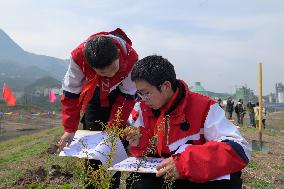
(240312) -- ZIGUI, March 12, 2024 (Xinhua) -- Students keep records of Myricaria laxiflora in Guojiaba Township of Zigui County, central China's Hubei Province, March 12, 2024. A total of 3,000 artificially bred rare and endangered plants were reintroduced into the wild in the Three Gorges Reservoir area in central China's Hubei Province on Tuesday. The plants, including 1,000 Myricaria laxiflora and 2,000 Plantago fengdouensis, are endemic to the Yangtze River and have been reintroduced into their historical distribution areas through artificial breeding efforts. (Xinhua/Hu Jingwen)

  •  
CHINA-HUBEI-ENDANGERED PLANTS-THREE GORGES RESERVOIR AREA (CN)

CHINA-HUBEI-ENDANGERED PLANTS-THREE GORGES RESERVOIR AREA (CN)

(240312) -- ZIGUI, March 12, 2024 (Xinhua) -- Students plant Plantago fengdouensis in Guojiaba Township of Zigui County, central China's Hubei Province, March 12, 2024. A total of 3,000 artificially bred rare and endangered plants were reintroduced into the wild in the Three Gorges Reservoir area in central China's Hubei Province on Tuesday. The plants, including 1,000 Myricaria laxiflora and 2,000 Plantago fengdouensis, are endemic to the Yangtze River and have been reintroduced into their historical distribution areas through artificial breeding efforts. (Xinhua/Hu Jingwen)

  •  
CHINA-FUJIAN-MIGRATORY BIRDS (CN)

CHINA-FUJIAN-MIGRATORY BIRDS (CN)

(231119) -- QUANZHOU, Nov. 19, 2023 (Xinhua) -- Birds fly in the Quanzhou Bay estuary wetland in southeast China's Fujian Province, Nov. 18, 2023. Flocks of migratory birds have made stopovers in Fuzhou, Quanzhou and other areas in Fujian Province, as they make their way toward the south to get through the winter. Among them, the number of rare birds, such as black-faced spoonbills and spoon-billed sandpipers which are under first-class national protection in China, continues to increase. In recent years, Fujian Province has launched a series of ecological rehabilitation projects to strengthen efforts in wetlands protection, riverway management, marine litter treatment and forest vegetation restoration. With the continuous improvement in ecological environment, Fujian Province attracts a large number of migratory birds to come here for wintering and breeding every year. (Xinhua/Wei Peiquan)

  •  
CHINA-FUJIAN-MIGRATORY BIRDS (CN)

CHINA-FUJIAN-MIGRATORY BIRDS (CN)

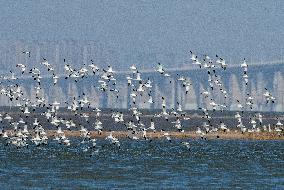
(231119) -- QUANZHOU, Nov. 19, 2023 (Xinhua) -- Avocets fly in the Quanzhou Bay estuary wetland in southeast China's Fujian Province, Nov. 18, 2023. Flocks of migratory birds have made stopovers in Fuzhou, Quanzhou and other areas in Fujian Province, as they make their way toward the south to get through the winter. Among them, the number of rare birds, such as black-faced spoonbills and spoon-billed sandpipers which are under first-class national protection in China, continues to increase. In recent years, Fujian Province has launched a series of ecological rehabilitation projects to strengthen efforts in wetlands protection, riverway management, marine litter treatment and forest vegetation restoration. With the continuous improvement in ecological environment, Fujian Province attracts a large number of migratory birds to come here for wintering and breeding every year. (Xinhua/Wei Peiquan)

  •  
CHINA-FUJIAN-MIGRATORY BIRDS (CN)

CHINA-FUJIAN-MIGRATORY BIRDS (CN)

(231119) -- QUANZHOU, Nov. 19, 2023 (Xinhua) -- Hoopoes are pictured in the Minjiang River estuary wetland in southeast China's Fujian Province, Nov. 15, 2023. Flocks of migratory birds have made stopovers in Fuzhou, Quanzhou and other areas in Fujian Province, as they make their way toward the south to get through the winter. Among them, the number of rare birds, such as black-faced spoonbills and spoon-billed sandpipers which are under first-class national protection in China, continues to increase. In recent years, Fujian Province has launched a series of ecological rehabilitation projects to strengthen efforts in wetlands protection, riverway management, marine litter treatment and forest vegetation restoration. With the continuous improvement in ecological environment, Fujian Province attracts a large number of migratory birds to come here for wintering and breeding every year. (Xinhua/Wei Peiquan)

  •  
CHINA-FUJIAN-MIGRATORY BIRDS (CN)

CHINA-FUJIAN-MIGRATORY BIRDS (CN)

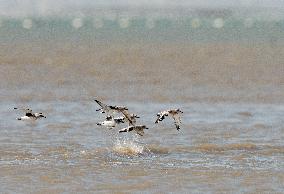
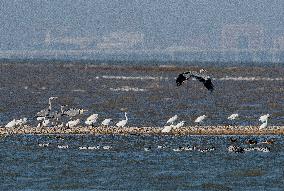
(231119) -- QUANZHOU, Nov. 19, 2023 (Xinhua) -- Water birds are pictured in the Quanzhou Bay estuary wetland in southeast China's Fujian Province, Nov. 18, 2023. Flocks of migratory birds have made stopovers in Fuzhou, Quanzhou and other areas in Fujian Province, as they make their way toward the south to get through the winter. Among them, the number of rare birds, such as black-faced spoonbills and spoon-billed sandpipers which are under first-class national protection in China, continues to increase. In recent years, Fujian Province has launched a series of ecological rehabilitation projects to strengthen efforts in wetlands protection, riverway management, marine litter treatment and forest vegetation restoration. With the continuous improvement in ecological environment, Fujian Province attracts a large number of migratory birds to come here for wintering and breeding every year. (Xinhua/Wei Peiquan)

  •  
CHINA-FUJIAN-MIGRATORY BIRDS (CN)

CHINA-FUJIAN-MIGRATORY BIRDS (CN)

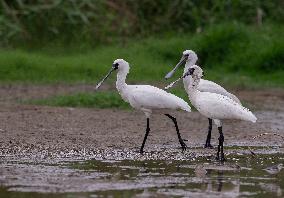
(231119) -- QUANZHOU, Nov. 19, 2023 (Xinhua) -- Black-faced spoonbills are pictured in the Minjiang River estuary wetland in southeast China's Fujian Province, Nov. 15, 2023. Flocks of migratory birds have made stopovers in Fuzhou, Quanzhou and other areas in Fujian Province, as they make their way toward the south to get through the winter. Among them, the number of rare birds, such as black-faced spoonbills and spoon-billed sandpipers which are under first-class national protection in China, continues to increase. In recent years, Fujian Province has launched a series of ecological rehabilitation projects to strengthen efforts in wetlands protection, riverway management, marine litter treatment and forest vegetation restoration. With the continuous improvement in ecological environment, Fujian Province attracts a large number of migratory birds to come here for wintering and breeding every year. (Xinhua/Wei Peiquan)

  •  
CHINA-FUJIAN-MIGRATORY BIRDS (CN)

CHINA-FUJIAN-MIGRATORY BIRDS (CN)

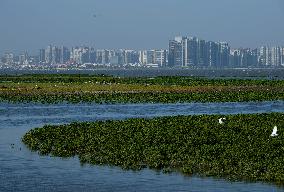
(231119) -- QUANZHOU, Nov. 19, 2023 (Xinhua) -- This photo taken on Nov. 18, 2023 shows the Quanzhou Bay estuary wetland in southeast China's Fujian Province. Flocks of migratory birds have made stopovers in Fuzhou, Quanzhou and other areas in Fujian Province, as they make their way toward the south to get through the winter. Among them, the number of rare birds, such as black-faced spoonbills and spoon-billed sandpipers which are under first-class national protection in China, continues to increase. In recent years, Fujian Province has launched a series of ecological rehabilitation projects to strengthen efforts in wetlands protection, riverway management, marine litter treatment and forest vegetation restoration. With the continuous improvement in ecological environment, Fujian Province attracts a large number of migratory birds to come here for wintering and breeding every year. (Xinhua/Wei Peiquan)

  •  
CHINA-FUJIAN-MIGRATORY BIRDS (CN)

CHINA-FUJIAN-MIGRATORY BIRDS (CN)

(231119) -- QUANZHOU, Nov. 19, 2023 (Xinhua) -- Birds fly over the Quanzhou Bay estuary wetland in southeast China's Fujian Province, Nov. 18, 2023. Flocks of migratory birds have made stopovers in Fuzhou, Quanzhou and other areas in Fujian Province, as they make their way toward the south to get through the winter. Among them, the number of rare birds, such as black-faced spoonbills and spoon-billed sandpipers which are under first-class national protection in China, continues to increase. In recent years, Fujian Province has launched a series of ecological rehabilitation projects to strengthen efforts in wetlands protection, riverway management, marine litter treatment and forest vegetation restoration. With the continuous improvement in ecological environment, Fujian Province attracts a large number of migratory birds to come here for wintering and breeding every year. (Xinhua/Wei Peiquan)

  •  

A look at equestrian training in China's Xinjiang

STORY: A look at equestrian training in China's Xinjiang DATELINE: Oct. 2, 2023 LENGTH: 0:01:27 LOCATION: URUMQI, China CATEGORY: SPORTS SHOTLIST: 1. various of equestrian training 2. SOUNDBITE 1 (Chinese): HE WENJING, Equestrian sports enthusiast 3. SOUNDBITE 2 (Chinese): ZHANG YAN, Person in charge of equestrian sports at a college in Xinjiang STORYLINE: At present, the 19th Asian Games are underway in China's Hangzhou, and many are attracted by the equestrian competition at the Games. In the vast land of China's Xinjiang, many areas have a long history of horse breeding and riding, and equestrian training has been gaining popularity recently. SOUNDBITE 1 (Chinese): HE WENJING, Equestrian sports enthusiast "At first, I watched the excellent performances of equestrian athletes on television, and then I learned about the sport of equestrian." SOUNDBITE 2 (Chinese): ZHANG YAN, Person in charge of equestrian sports at a college in Xinjiang "In recent years, some Chinese riders have frequently achieved res

  •  

China's Bijie balances growth, green drive

STORY: China's Bijie balances growth, green drive DATELINE: Aug. 4, 2023 LENGTH: 00:02:42 LOCATION: GUIYANG, China CATEGORY: ENVIRONMENT SHOTLIST: 1. various of views in Guizhou 2. SOUNDBITE 1 (Chinese): ZHANG XIURONG, Project manager of Guizhou Yongju Eco-Agriculture Co., Ltd. 3. various of workers and farmers in Guizhou 4. various of views in Guizhou 5. SOUNDBITE 2 (Chinese): YANG JUN, Party official of Jinxing Village 6. various of workers and farmers in Guizhou 7. various of views in Guizhou 8. SOUNDBITE 3 (Chinese): JIN JI, Head of local breeding base 9. various of views in Guizhou STORYLINE: Bijie City was one of the areas most severely affected by rocky desertification in southwest China's Guizhou Province. In recent years, the city has been striving to balance ecology protection and economic growth. With green transformation, Bijie completed the afforestation of 7.17 million mu (478,493 hectares) and reclaimed 862.69 square kilometers of rocky desertification from 2017 to 2022. During the same p

  •  
CHINA-GUIZHOU-NEW ENERGY INDUSTRY-DEVELOPMENT (CN)

CHINA-GUIZHOU-NEW ENERGY INDUSTRY-DEVELOPMENT (CN)

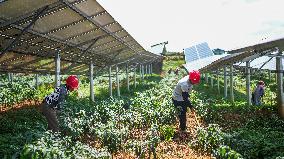
(230717) -- GUIYANG, July 17, 2023 (Xinhua) -- Villagers plant hot peppers under the photovoltaic (PV) panels in Xinqiao Town of Anlong County, southwest China's Guizhou Province, July 5, 2023. Guizhou has made big stride in the development of new energy industry in recent years, and also developed farming and livestock breeding by making the most of the areas under PV panels. By the end of June 2023, the total installed capacity of new energy in Guizhou had reached 21.81 million kilowatts. (Xinhua/Tao Liang)

  •  
CHINA-GUIZHOU-NEW ENERGY INDUSTRY-DEVELOPMENT (CN)

CHINA-GUIZHOU-NEW ENERGY INDUSTRY-DEVELOPMENT (CN)

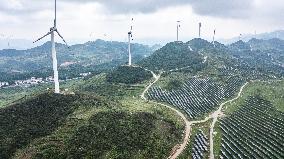
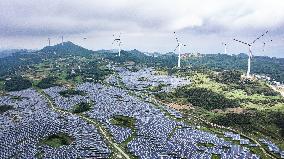
(230717) -- GUIYANG, July 17, 2023 (Xinhua) -- This aerial photo taken on July 6, 2023 shows a photovoltaic (PV) power plant in Ertang Town of Weining Yi, Hui and Miao Autonomous County in southwest China's Guizhou Province. Guizhou has made big stride in the development of new energy industry in recent years, and also developed farming and livestock breeding by making the most of the areas under PV panels. By the end of June 2023, the total installed capacity of new energy in Guizhou had reached 21.81 million kilowatts. (Xinhua/Tao Liang)

  •  
CHINA-GUIZHOU-NEW ENERGY INDUSTRY-DEVELOPMENT (CN)

CHINA-GUIZHOU-NEW ENERGY INDUSTRY-DEVELOPMENT (CN)

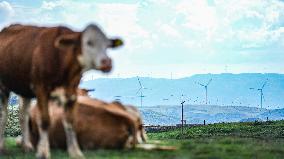
(230717) -- GUIYANG, July 17, 2023 (Xinhua) -- Oxen rest on a grassland under wind power turbines in Xueshan Town of Weining Yi, Hui and Miao Autonomous County in southwest China's Guizhou Province, July 13, 2023. Guizhou has made big stride in the development of new energy industry in recent years, and also developed farming and livestock breeding by making the most of the areas under PV panels. By the end of June 2023, the total installed capacity of new energy in Guizhou had reached 21.81 million kilowatts. (Xinhua/Tao Liang)

  •  
CHINA-GUIZHOU-NEW ENERGY INDUSTRY-DEVELOPMENT (CN)

CHINA-GUIZHOU-NEW ENERGY INDUSTRY-DEVELOPMENT (CN)

(230717) -- GUIYANG, July 17, 2023 (Xinhua) -- This aerial photo taken on July 6, 2023 shows a photovoltaic (PV) power plant in Ertang Town of Weining Yi, Hui and Miao Autonomous County in southwest China's Guizhou Province. Guizhou has made big stride in the development of new energy industry in recent years, and also developed farming and livestock breeding by making the most of the areas under PV panels. By the end of June 2023, the total installed capacity of new energy in Guizhou had reached 21.81 million kilowatts. (Xinhua/Tao Liang)

  •  
CHINA-GUIZHOU-NEW ENERGY INDUSTRY-DEVELOPMENT (CN)

CHINA-GUIZHOU-NEW ENERGY INDUSTRY-DEVELOPMENT (CN)

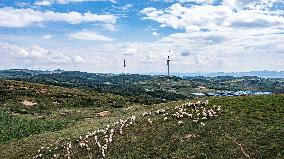
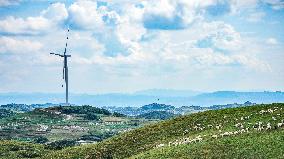
(230717) -- GUIYANG, July 17, 2023 (Xinhua) -- This aerial photo taken on July 13, 2023 shows sheep grazing on a grassland under wind power turbines in Xueshan Town of Weining Yi, Hui and Miao Autonomous County in southwest China's Guizhou Province. Guizhou has made big stride in the development of new energy industry in recent years, and also developed farming and livestock breeding by making the most of the areas under PV panels. By the end of June 2023, the total installed capacity of new energy in Guizhou had reached 21.81 million kilowatts. (Xinhua/Tao Liang)

  •  
CHINA-GUIZHOU-NEW ENERGY INDUSTRY-DEVELOPMENT (CN)

CHINA-GUIZHOU-NEW ENERGY INDUSTRY-DEVELOPMENT (CN)

(230717) -- GUIYANG, July 17, 2023 (Xinhua) -- Sheep graze on a grassland under wind power turbines in Xueshan Town of Weining Yi, Hui and Miao Autonomous County in southwest China's Guizhou Province, July 13, 2023. Guizhou has made big stride in the development of new energy industry in recent years, and also developed farming and livestock breeding by making the most of the areas under PV panels. By the end of June 2023, the total installed capacity of new energy in Guizhou had reached 21.81 million kilowatts. (Xinhua/Tao Liang)

  •  
CHINA-GUIZHOU-NEW ENERGY INDUSTRY-DEVELOPMENT (CN)

CHINA-GUIZHOU-NEW ENERGY INDUSTRY-DEVELOPMENT (CN)

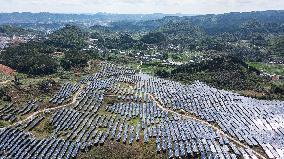
(230717) -- GUIYANG, July 17, 2023 (Xinhua) -- This aerial photo taken on July 5, 2023 shows a photovoltaic (PV) power plant in Xinqiao Town of Anlong County in southwest China's Guizhou Province. Guizhou has made big stride in the development of new energy industry in recent years, and also developed farming and livestock breeding by making the most of the areas under PV panels. By the end of June 2023, the total installed capacity of new energy in Guizhou had reached 21.81 million kilowatts. (Xinhua/Tao Liang)

  •  

Yunnan helps cranes make migration journey

STORY: Yunnan helps cranes make migration journey DATELINE: April 8, 2023 LENGTH: 00:00:56 LOCATION: KUNMING, China CATEGORY: ENVIRONMENT SHOTLIST: 1. various of cranes in Yunnan STORYLINE: Local villagers in the city of Zhaotong in southwest China's Yunnan Province view the black-necked crane as an auspicious bird, and many, along with professional staff, volunteer to keep the birds fit and healthy ahead of their northward migration each spring. The black-necked crane is under top-class protection in China. The Dashanbao national nature reserve is among the protected areas with the largest populations of black-necked cranes per unit area in China. It is also an important wintering habitat and migration transit point for the birds on the Yunnan-Guizhou Plateau. The cranes fly to Dashanbao for wintering at the end of October every year, heading north again in March to return to their breeding grounds. According to the latest monitoring by the reserve's management and protection bureau, the northward migr

  •  

Panda cubs greet visitors ahead of New Year

STORY: Panda cubs greet visitors ahead of New Year DATELINE: Dec. 31, 2022 LENGTH: 00:01:36 LOCATION: CHENGDU, China CATEGORY: ENTERTAINMENT SHOTLIST: 1. various of giant panda cubs greeting visitors STORYLINE: Thirteen giant panda cubs born in 2022 met the public Thursday in Chengdu, the capital of southwest China's Sichuan Province, to greet their fans before the New Year. Visitors cheered as the cubs, held by their keepers, came into sight in a festively decorated area of Chengdu Research Base of Giant Panda Breeding at around 10 a.m. The newborns are among 15 giant panda cubs bred at the panda base this year. They are all in good health, with the heaviest weighing more than 12 kg and the lightest close to 6 kg. In recent years, the base has cooperated with 45 institutions from 17 countries and regions in scientific research on giant pandas. It has overcome many challenges in areas such as captive panda breeding, feeding, and population genetic management, thus helping the panda population increase

  •  
CHINA-FUJIAN-ABALONE BREEDING (CN)

CHINA-FUJIAN-ABALONE BREEDING (CN)

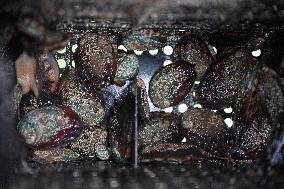
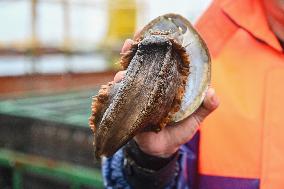
(221126) -- LIANJIANG, Nov. 26, 2022 (Xinhua) -- This photo taken on Nov. 25, 2022 shows an abalone on a transport vessel in Lianjiang County of southeast China's Fujian Province. Abalone breeding is one of the pillar industries in Lianjiang County. As abalones have very strict requirements on their growing environment, especially the water temperature, fishermen in Lianjiang have adopted a way of breeding in different sea areas to improve the survival rate of abalones. Every year at the turn of spring and summer in April and May, abalones are sent to the northern sea area, where the water is cooler, to spend the summer, and then come back to Lianjiang when late autumn comes. In this way, not only is the yield of abalones increased, but also the quality is improved. (Xinhua/Zhou Yi)

  •  
CHINA-FUJIAN-ABALONE BREEDING (CN)

CHINA-FUJIAN-ABALONE BREEDING (CN)

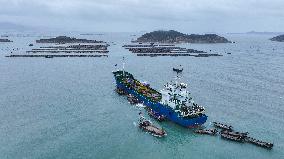
(221126) -- LIANJIANG, Nov. 26, 2022 (Xinhua) -- This aerial photo taken on Nov. 25, 2022 shows a transport vessel carring abalones on the waters of Lianjiang County, southeast China's Fujian Province. Abalone breeding is one of the pillar industries in Lianjiang County. As abalones have very strict requirements on their growing environment, especially the water temperature, fishermen in Lianjiang have adopted a way of breeding in different sea areas to improve the survival rate of abalones. Every year at the turn of spring and summer in April and May, abalones are sent to the northern sea area, where the water is cooler, to spend the summer, and then come back to Lianjiang when late autumn comes. In this way, not only is the yield of abalones increased, but also the quality is improved. (Xinhua/Zhou Yi)

  •  
CHINA-FUJIAN-ABALONE BREEDING (CN)

CHINA-FUJIAN-ABALONE BREEDING (CN)

(221126) -- LIANJIANG, Nov. 26, 2022 (Xinhua) -- Fishermen transfer abalones from a transport vessel to a fishing boat in Lianjiang County of southeast China's Fujian Province, Nov. 25, 2022. Abalone breeding is one of the pillar industries in Lianjiang County. As abalones have very strict requirements on their growing environment, especially the water temperature, fishermen in Lianjiang have adopted a way of breeding in different sea areas to improve the survival rate of abalones. Every year at the turn of spring and summer in April and May, abalones are sent to the northern sea area, where the water is cooler, to spend the summer, and then come back to Lianjiang when late autumn comes. In this way, not only is the yield of abalones increased, but also the quality is improved. (Xinhua/Zhou Yi)

  •  
CHINA-FUJIAN-ABALONE BREEDING (CN)

CHINA-FUJIAN-ABALONE BREEDING (CN)

(221126) -- LIANJIANG, Nov. 26, 2022 (Xinhua) -- Fishermen have their meal at an abalone breeding base on the sea in Lianjiang County, southeast China's Fujian Province, Nov. 25, 2022. Abalone breeding is one of the pillar industries in Lianjiang County. As abalones have very strict requirements on their growing environment, especially the water temperature, fishermen in Lianjiang have adopted a way of breeding in different sea areas to improve the survival rate of abalones. Every year at the turn of spring and summer in April and May, abalones are sent to the northern sea area, where the water is cooler, to spend the summer, and then come back to Lianjiang when late autumn comes. In this way, not only is the yield of abalones increased, but also the quality is improved. (Xinhua/Zhou Yi)

  •  
CHINA-FUJIAN-ABALONE BREEDING (CN)

CHINA-FUJIAN-ABALONE BREEDING (CN)

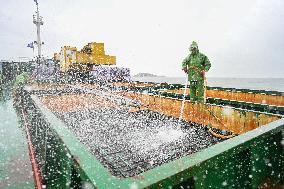
(221126) -- LIANJIANG, Nov. 26, 2022 (Xinhua) -- A fisherman works on a transport vessel on the waters of Lianjiang County, southeast China's Fujian Province, Nov. 25, 2022. Abalone breeding is one of the pillar industries in Lianjiang County. As abalones have very strict requirements on their growing environment, especially the water temperature, fishermen in Lianjiang have adopted a way of breeding in different sea areas to improve the survival rate of abalones. Every year at the turn of spring and summer in April and May, abalones are sent to the northern sea area, where the water is cooler, to spend the summer, and then come back to Lianjiang when late autumn comes. In this way, not only is the yield of abalones increased, but also the quality is improved. (Xinhua/Zhou Yi)

  •  
CHINA-FUJIAN-ABALONE BREEDING (CN)

CHINA-FUJIAN-ABALONE BREEDING (CN)

(221126) -- LIANJIANG, Nov. 26, 2022 (Xinhua) -- This photo taken on Nov. 25, 2022 shows abalones on a transport vessel in Lianjiang County of southeast China's Fujian Province. Abalone breeding is one of the pillar industries in Lianjiang County. As abalones have very strict requirements on their growing environment, especially the water temperature, fishermen in Lianjiang have adopted a way of breeding in different sea areas to improve the survival rate of abalones. Every year at the turn of spring and summer in April and May, abalones are sent to the northern sea area, where the water is cooler, to spend the summer, and then come back to Lianjiang when late autumn comes. In this way, not only is the yield of abalones increased, but also the quality is improved. (Xinhua/Zhou Yi)

  •  
CHINA-FUJIAN-ABALONE BREEDING (CN)

CHINA-FUJIAN-ABALONE BREEDING (CN)

(221126) -- LIANJIANG, Nov. 26, 2022 (Xinhua) -- A fisherman works on a transport vessel on the waters of Lianjiang County, southeast China's Fujian Province, Nov. 25, 2022. Abalone breeding is one of the pillar industries in Lianjiang County. As abalones have very strict requirements on their growing environment, especially the water temperature, fishermen in Lianjiang have adopted a way of breeding in different sea areas to improve the survival rate of abalones. Every year at the turn of spring and summer in April and May, abalones are sent to the northern sea area, where the water is cooler, to spend the summer, and then come back to Lianjiang when late autumn comes. In this way, not only is the yield of abalones increased, but also the quality is improved. (Xinhua/Zhou Yi)

  •  
CHINA-FUJIAN-ABALONE BREEDING (CN)

CHINA-FUJIAN-ABALONE BREEDING (CN)

(221126) -- LIANJIANG, Nov. 26, 2022 (Xinhua) -- This aerial photo taken on Nov. 25, 2022 shows a transport vessel carring abalones on the waters of Lianjiang County, southeast China's Fujian Province. Abalone breeding is one of the pillar industries in Lianjiang County. As abalones have very strict requirements on their growing environment, especially the water temperature, fishermen in Lianjiang have adopted a way of breeding in different sea areas to improve the survival rate of abalones. Every year at the turn of spring and summer in April and May, abalones are sent to the northern sea area, where the water is cooler, to spend the summer, and then come back to Lianjiang when late autumn comes. In this way, not only is the yield of abalones increased, but also the quality is improved. (Xinhua/Zhou Yi)

  •  
CHINA-FUJIAN-ABALONE BREEDING (CN)

CHINA-FUJIAN-ABALONE BREEDING (CN)

(221126) -- LIANJIANG, Nov. 26, 2022 (Xinhua) -- Fishermen transfer abalones from transport vessels to a breeding base in Lianjiang County of southeast China's Fujian Province, Nov. 25, 2022. Abalone breeding is one of the pillar industries in Lianjiang County. As abalones have very strict requirements on their growing environment, especially the water temperature, fishermen in Lianjiang have adopted a way of breeding in different sea areas to improve the survival rate of abalones. Every year at the turn of spring and summer in April and May, abalones are sent to the northern sea area, where the water is cooler, to spend the summer, and then come back to Lianjiang when late autumn comes. In this way, not only is the yield of abalones increased, but also the quality is improved. (Xinhua/Zhou Yi)

  •  
CHINA-HEILONGJIANG-SIBERIAN TIGERS-INT'L TIGER DAY (CN)

CHINA-HEILONGJIANG-SIBERIAN TIGERS-INT'L TIGER DAY (CN)

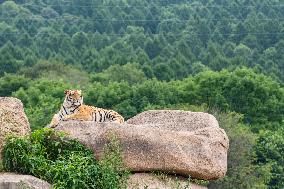
(220729) -- HARBIN, July 29, 2022 (Xinhua) -- A Siberian tiger rests on a rock at the feralization training area under the China Hengdaohezi Feline Breeding Center in northeast China's Heilongjiang Province, July 29, 2022. Tourists came to the China Hengdaohezi Feline Breeding Center in Hailin City on Friday in a way to observe the annual International Tiger Day, also known as Global Tiger Day, which falls on July 29. The center is now the world's largest breeding center for Siberian tigers, an endangered species. Dubbed "home of Siberian tigers", it now accommodates some 400 of these big cats and provides feralization training areas which take up 40,000 square meters. (Xinhua/Xie Jianfei)

  •  
CHINA-HEILONGJIANG-SIBERIAN TIGERS-INT'L TIGER DAY (CN)

CHINA-HEILONGJIANG-SIBERIAN TIGERS-INT'L TIGER DAY (CN)

(220729) -- HARBIN, July 29, 2022 (Xinhua) -- Siberian tiger cubs have fun at a forest park under the China Hengdaohezi Feline Breeding Center in northeast China's Heilongjiang Province, July 29, 2022. Tourists came to the China Hengdaohezi Feline Breeding Center in Hailin City on Friday in a way to observe the annual International Tiger Day, also known as Global Tiger Day, which falls on July 29. The center is now the world's largest breeding center for Siberian tigers, an endangered species. Dubbed "home of Siberian tigers", it now accommodates some 400 of these big cats and provides feralization training areas which take up 40,000 square meters. (Xinhua/Xie Jianfei)

  • Main
  • Top
  • Editorial
  • Creative
  • About Us
  • About ILG
  • Terms of use
  • Company
  • BEHIND
  • Price List
  • Single Plan
  • Monthly Plan
  • Services
  • Shooting
  • Rights Clearance
  • Support
  • FAQ
  • How To Buy
  • Contact Us
  • Become a Partner

© KYODO NEWS IMAGES INC

All Rights Reserved.

  • Editorial
  • Olympics
  • News
  • Sports
  • Japan
  • Tech
  • Royal
  • Disaster
  • NorthKorea
  • Old Japan
  • SNS
  • Creative
  • Food
  • Japan
  • Landscape
  • Animal
  • Popular
  • #Ukraine
  • #Russia
  • #coronavirus
  • #N. Korea
  • #Thailand
  • #China
  • #Ukraine
  • #Russia
  • #coronavirus
  • #N. Korea
  • #Thailand
  • #China
  • Food
  • Japan
  • Landscape
  • Animal
  • Olympics
  • News
  • Sports
  • Japan
  • Tech
  • Royal
  • Disaster
  • NorthKorea
  • Old Japan
  • SNS